
Coconino County Warrant Checks
Coconino County posts no countywide warrant roster anyone can browse. Your route depends on the court. Start with a citation, summons, release paper, or old notice. That paper should name the issuing court, whether Coconino County Superior Court, a Justice Court, or a Municipal Court. The issuing court is the best source for current status because its docket records any recall, quash order, hearing, and bond terms. For a statewide lead, the Arizona DPS Warrant Search and Arizona Public Access case records can point you somewhere useful. Neither replaces direct confirmation from the clerk. If a result may be active, use a lawyer before traveling to a court or police office.
- Identify the court and case number from papers already in hand.
- Check Public Access for case activity and note its limits.
- Use the DPS name and birth-date search as a separate lead.
- Contact the issuing clerk or request a narrow record if status stays unclear.
- Ask a lawyer about bond, a hearing, voluntary appearance, or a motion to quash.
Coconino Warrant Search Tools Differ
Arizona Public Access pulls case activity from participating courts. The site sits behind a CAPTCHA. Updates generally arrive weekly. Sealed, juvenile, victim, mental-health, and other restricted matters stay off it. An entry can point you to the right clerk, but it is not a dedicated active-warrant list. DPS works differently. It wants a first name, last name, and date of birth, caps results at five, and warns that court-supplied data may not be current or complete. A blank result from either system proves nothing. Name and birth date are just search inputs. They cannot settle whether a returned record belongs to your case. Compare the court and case number, keep the result private, and call the listed clerk. If DPS names a court outside Coconino County, that court must answer the status question.
| Source | Best use | Limit |
|---|---|---|
| Public Access | Find court and docket activity | Weekly data and exclusions |
| Arizona DPS | Statewide name and birth-date lead | Five-result cap |
| Issuing clerk | Confirm status and next step | Correct court required |
Warrants in Coconino County: The Main Types
Three warrant types come up in Coconino County. An arrest warrant issues after a judge finds probable cause in a criminal case. A bench warrant is different. It usually follows a missed court date or a ignored court order. A search warrant only authorizes a search, and it is not a wanted list. You may also see the word capias in some Arizona records, meaning a command to arrest or appear, but the document itself and the issuing court control what it means. Civil traffic defaults need care here. Coconino County guidance says a civil traffic case does not by itself lead to a warrant, though fees and license action may follow, while skipping a required date in a criminal traffic or misdemeanor case can bring a bench warrant.
| Type | Typical basis | Authority |
|---|---|---|
| Arrest | Probable cause | Judge or magistrate |
| Bench | Missed court or noncompliance | Case judge |
| Search | Probable cause to search | Judicial officer |
| Capias | Command to arrest or appear | Named court |
Coconino Sheriff Warrant Coverage
The Sheriff's Warrants Section maintains, enters, and clears warrants for Coconino County Superior Court, Flagstaff City Court, and the Fredonia, Flagstaff, Williams, and Page Justice Courts. That is an operational job. The sheriff posts no browsable roster of current county warrants. The service boundary matters. A section can keep an entry on file while the issuing judge alone decides whether to quash it. Municipal courts outside that list may keep their own status records. Ask the issuing clerk about judicial action. Use Records for a focused request. The sheriff's official page describes the section's duties without exposing private case data.
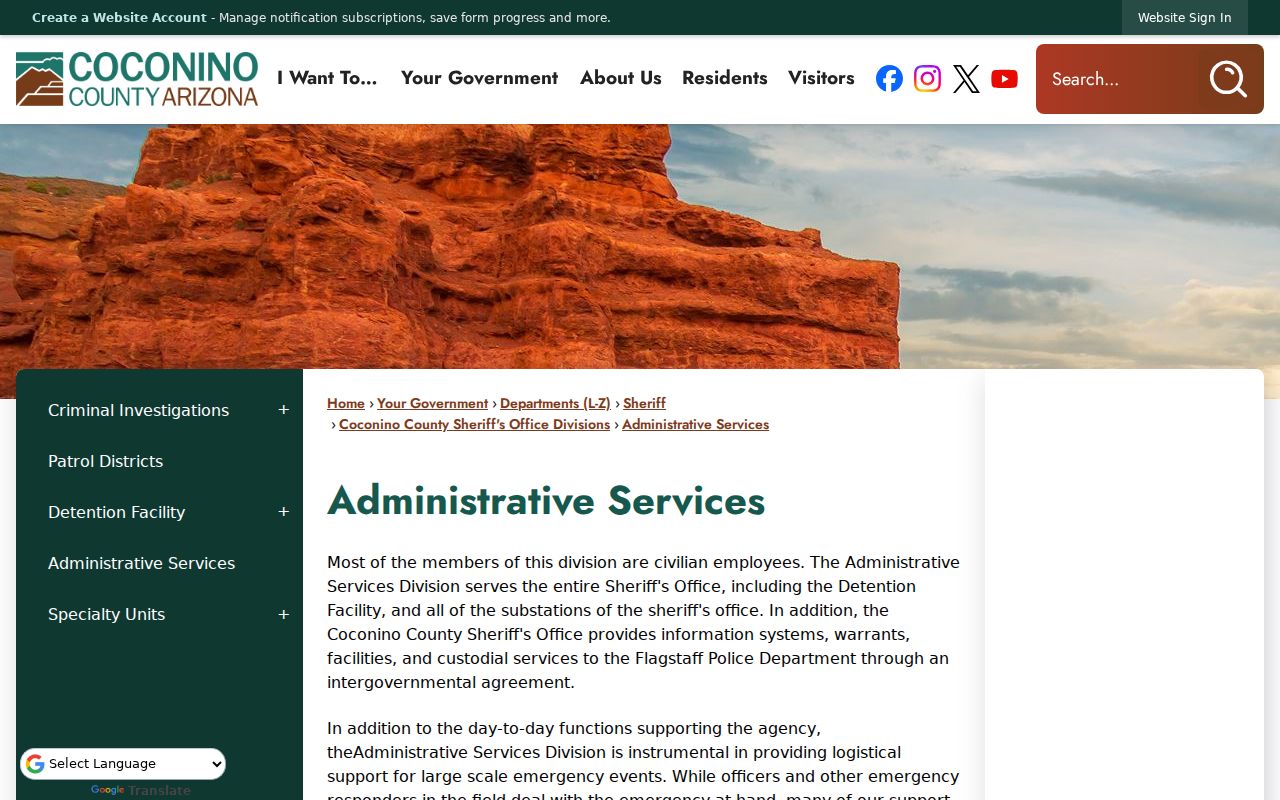
It shows why jurisdiction must be identified before relying on any search result.
Coconino County Warrant Records: What They Show
A useful record ties the order to a court case. Common fields tell the story. Expect the court, case number, subject name, issue date, alleged charge or case type, status, bond or release information, and dates showing service, recall, or clearance. Keep the paper types straight. A police report, jail entry, docket, and warrant register stay distinct even when one event produced them all. Coconino County has no stable public warrant-number format. Don't guess from a code. Give the clerk the full number exactly as it appears.
| Number | Exact identifier, such as CASE NUMBER |
|---|---|
| Issuing court | Superior, Justice, or Municipal Court |
| Dates | Issue date and later status action |
| Case type | Court description, not a finding of guilt |
| Bond field | Terms to confirm with court or jail |
| Disposition | Served, recalled, quashed, or other action |
Coconino Court Search Has Limits
Public Access is broad but not universal. Its own notices say the public site does not show all case types and that data can lag behind the court record. Sealed files and some orders stay hidden. Juvenile access follows separate Arizona rules. A Coconino County municipal matter may still need a direct call to that city's clerk, and the official interface shows its statewide reach behind its CAPTCHA gate.
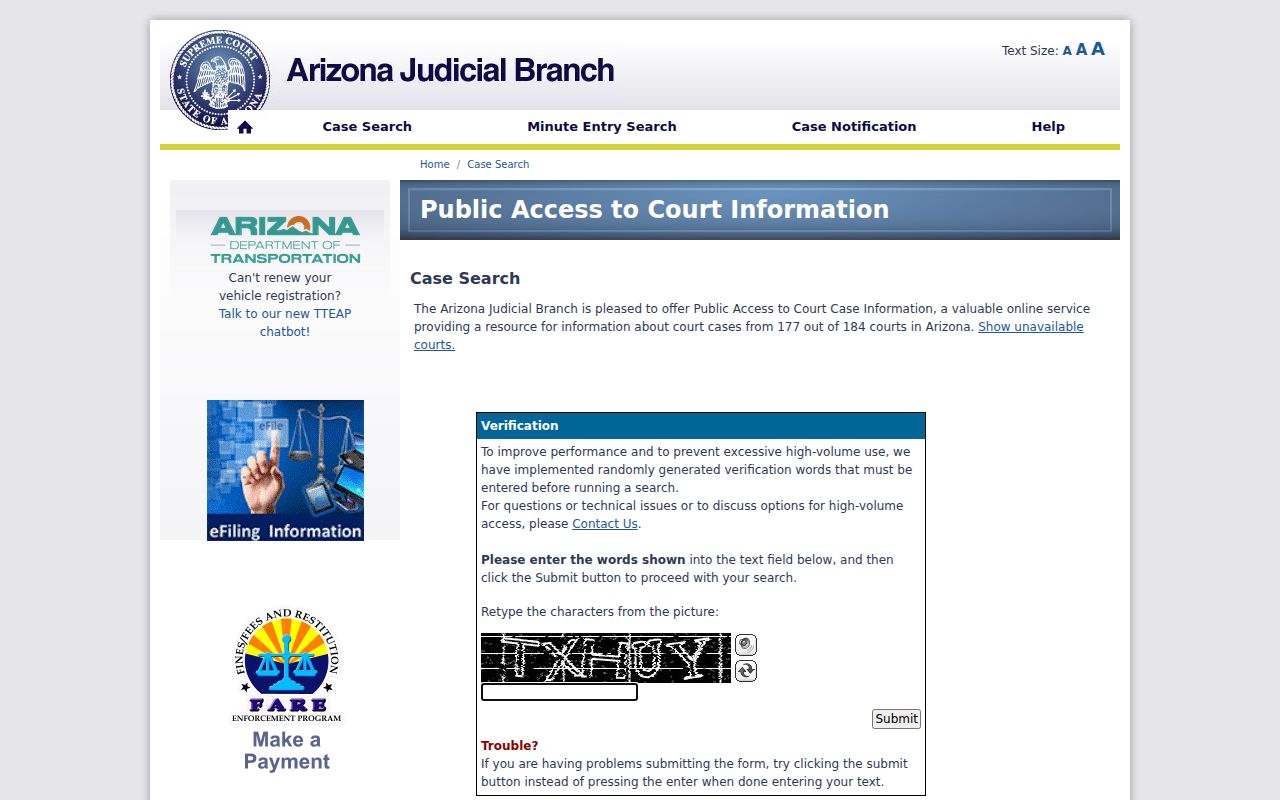
Use any result only to identify the case, then ask that Coconino County court directly whether a warrant remains active today.
Key point: No match is a search result, not an official finding that Coconino County has no warrant.
Coconino County Warrants: Who Issues, Who Serves
Coconino County Superior Court handles felonies and other serious matters, and its Clerk keeps the Superior Court records. The Justice Courts sit apart. Flagstaff, Fredonia, Page, and Williams each keep their own cases. City courts work the same way. Municipal courts in Flagstaff, Fredonia, Page, Sedona, and Williams maintain city matters, and the Superior Court Clerk does not routinely keep traffic citations or misdemeanor complaints filed in those lower courts. Judges issue or quash warrants. The Sheriff's Office and local police serve them. Records staff may supply non-exempt files, but they cannot change a court order.
Clerk of the Superior Court
200 N. San Francisco Street
Flagstaff, AZ 86001
928-679-7600
Coconino Warrant Records by Request
A public screen will not always settle the question, so a written request is the next step. The Sheriff Records Requests page sends requests to the shared Flagstaff Police and Coconino County Sheriff's Records Section. Online, mail, and in-person routes are all documented. But a routine report request is not an active-warrant check. Spell out exactly what you want. Ask for non-exempt, redacted warrant-register fields tied to one court, one record type, and a set date range. Useful fields include the case number, issue date, status date, and any quash or clearance date. State that you do not need personal identifiers beyond that. Also ask the Coconino County custodian about the fee, a cost estimate, and the legal basis for anything withheld.
Records boundary: A report can document past events but may not prove a court order is active now.
Handling a Coconino County Warrant
Once a court confirms an active warrant, talk with a lawyer before acting. The right path turns on the warrant type, the charge, the bond, and the judge. Coconino County materials point to arranging an appearance, posting bond where allowed, voluntary surrender, and asking the court to recall or quash the order. Only the issuing court can grant that relief. An online payment is not a recall. A vendor records money. A judge records the quash. Keep every receipt and court order, then check the docket to confirm the warrant's status. If an arrest happens, county guidance calls for a prompt initial appearance covering the charges, rights, counsel, and release terms.
Important: Speak with a lawyer before appearing in person because an active warrant can lead to arrest.
Coconino Justice Bus Warrant Help
The Justice Bus exists for Coconino County residents who live far from Flagstaff or face travel barriers. Event notices describe walk-in services, including possible warrant quashing for eligible matters, plea changes, and other court work. Eligibility shifts with each stop and court. Check the current county event calendar, since an old notice never promises a future service date. County sources also count results over different periods. A November 2025 notice reported seven events, 134 people served, and 26 warrants quashed. The 2025 CJCC Annual Report listed eight stops, 138 people, and 30 warrants quashed. Keep those totals separate. Both show mobile access is a real part of resolving Coconino County warrants.
Warrant Record Access Under Arizona Law
Arizona law begins with a right to inspect public records. That right does not turn every warrant or court file into an open web result. Agencies may redact protected facts, and courts control sealed files. Juvenile records carry distinct limits. Custodians owe prompt access, yet the issuing court remains the best source for present judicial status. When part of a record is withheld, ask for the reason and the legal basis. A narrow request usually moves faster in Coconino County than a demand for every file.
Key rules:
A.R.S. § 39-121 sets the inspection baseline.
A.R.S. § 39-121.01 covers custodians, copies, and prompt access.
A.R.S. § 8-208 controls juvenile-record access.
Coconino Traffic Warrants Need Sorting
Read the citation before assuming a missed date means a warrant. Coconino County splits civil traffic from criminal traffic. A civil default can bring fees, collections, or license action, but county guidance says it does not create a warrant. Failure to appear in criminal traffic court can bring a bench warrant and a new issue on top of the old one. The court named on the citation matters more than the city where the stop happened. A city citation may belong to Municipal Court. Another case may belong to Justice Court. The Coconino County traffic warrant process explains how to verify the case before choosing a payment route.
- Civil default
- Nonappearance that can add fees or license action without a warrant.
- Criminal FTA
- A missed required appearance that may lead to a bench warrant.
- Continuance
- A date-change request that takes effect only if the court grants it.
Coconino Warrant Scam Warning
Coconino County warned the public in September 2025 about a caller posing as a Jury Commissioner. The caller threatened a warrant and fished for personal facts. The tactic leans on fear and speed. An urgent demand for cash proves nothing about whether a warrant exists. Hang up. Find the official court number on a county or city government site and call it yourself. Never trust a callback number, payment link, or caller ID supplied by the person making the threat. Williams police add that officers do not call to demand money for warrants or subpoenas.
Scam check: Verify the case through an official court directory before sharing data or sending funds.
Coconino Federal and Tribal Warrants
County and state portals will not settle federal or tribal warrant status. The District of Arizona runs a Flagstaff hearing site, but that location takes no filings. PACER is a federal docket tool, not a live warrant check. The U.S. Marshals task force is an enforcement contact, not a public county roster. Tribal matters stay with the relevant tribal court. A Justice Bus stop at Navajo Nation District Court does not turn every tribal case into a Coconino County case. The same line applies to Yavapai County matters near Sedona. Name the issuing jurisdiction first. The official federal page documents the Flagstaff facility and its hearing-only limit.
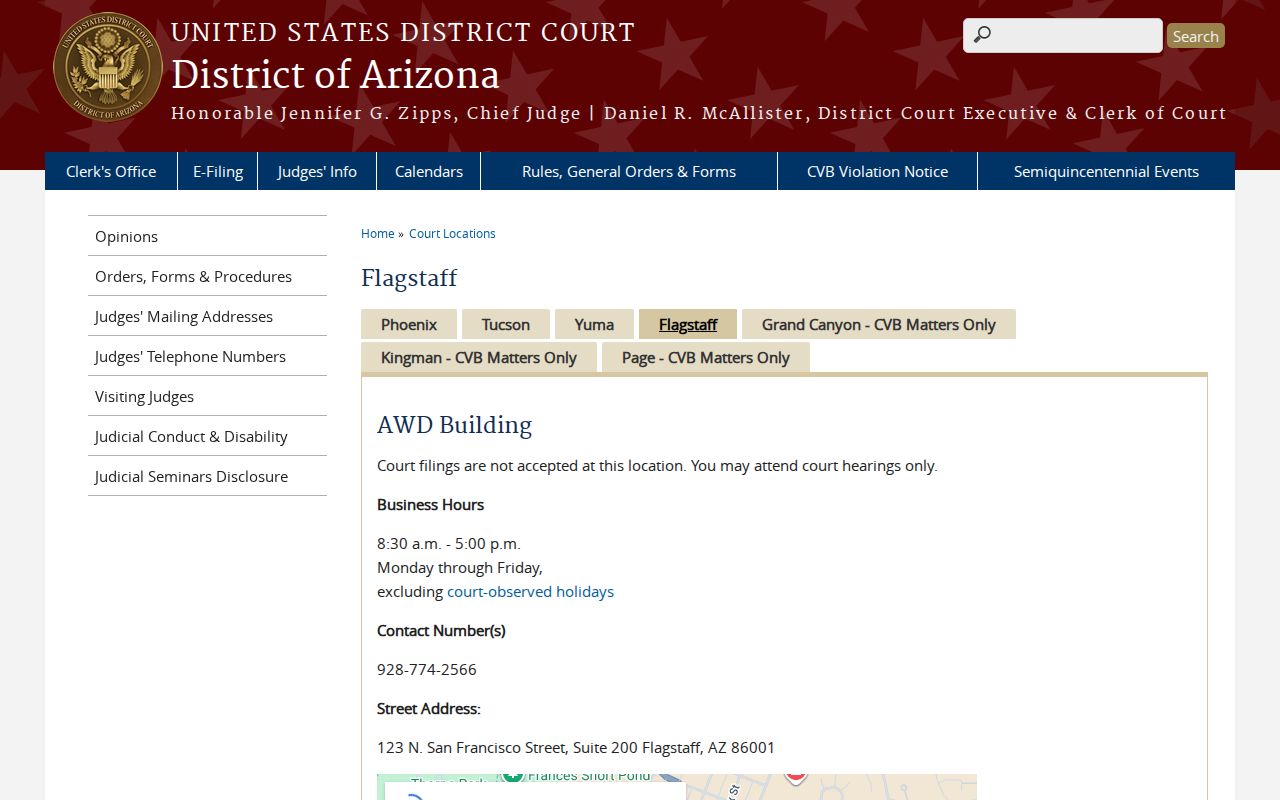
The source shows why federal questions stay outside the county search path.
City Warrant Records in Coconino County
Five city pages follow the county plan's 2020 Census ranking. Each separates Municipal Court from Justice Court, and police reports from court status. Sedona's figure covers its Coconino County portion, though its city court serves the citywide jurisdiction. Contacts can change, so call before you travel.
Flagstaff Warrant Records
76,831 · Municipal, Justice, and Superior Court routes
Page Warrant Records
7,440 · Magistrate and Justice Court checks
Williams Warrant Records
3,202 · Separate Municipal and Justice cases
Sedona Warrant Records
2,547 in Coconino County · Two-county city
Fredonia Warrant Records
1,323 · Conflicting contacts need verification
Coconino Warrant Arrest and Release
An arrest on a warrant in Coconino County is a beginning, not an ending. Booking is just the first step. County guidance says a person taken into custody generally sees a magistrate within 24 hours. At that appearance the judge explains the charge, reviews rights, addresses counsel, and sets the terms of release. A summons can replace a warrant in some cases. Either way, the person must respond on the date shown. Coconino County runs its main detention facility in Flagstaff, with a temporary holding site in Page. Jail staff can answer custody questions. Case dates and release orders, though, belong to the court. Weekend and holiday initial appearances follow a separate county notice. Families should rely on official jail and court contacts rather than social posts to learn where someone is held and which court owns the case. One caution on bond. A figure on an old docket, payment site, or past notice may no longer be the release term, since a judge can change it. Ask the jail which court set the conditions. Then confirm the current order with that court. A lawyer can explain whether bond, a release review, or another hearing fits the situation.